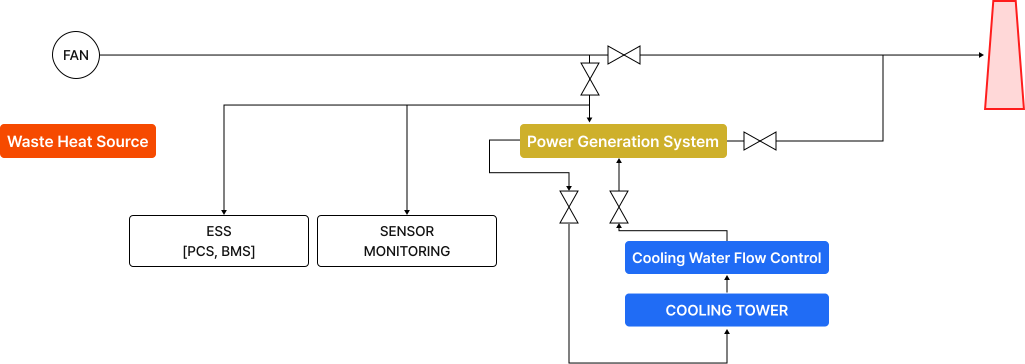
Introduction to Thermoelectric Power Generation

Features of Livingcare

Thermoelectric Power Generation System

By Waste Heat Source
An optimized, customized system that adapts to various types of waste heat — including gas, hot water, and steam.
By Temperature Range
Equipped with thermoelectric modules that deliver maximum efficiency across different temperature levels, from high-temperature to mid/low-temperature heat sources.
Power Utilization (Grid-Connected Type)
Can be integrated with large-scale power generation systems such as residential areas, buildings, and factories connected to the KEPCO power grid. (REC certification available upon legal approval.)
Power Utilization (Stand-Alone Type)
Generated electricity can be used independently without connection to an external power grid.
Configuration of Livingcare

Thermoelectric Power Generation System

Thermoelectric Generator
A core device that directly converts heat into electrical energy by utilizing the temperature difference between the heat source (waste heat) and the cooling side (cold sink).
Collector
A device that gathers the direct current (DC) electricity generated from the thermoelectric modules and efficiently transfers it to the inverter.
Inverter
Converts the DC power produced by the thermoelectric generator into alternating current (AC) power for use in general appliances or grid systems.
Battery (Energy Storage System)
Stores the generated electricity for later use. The stored energy can be used during nighttime or when power demand increases, improving overall energy utilization efficiency.
Monitoring System
Monitors the system’s operational status in real time, detects faults immediately, and supports effective management through analysis of system efficiency and data.
High / Low Temperature Heat Supply Piping
Equipment that supplies and distributes waste heat and cooling water to the thermoelectric generator.
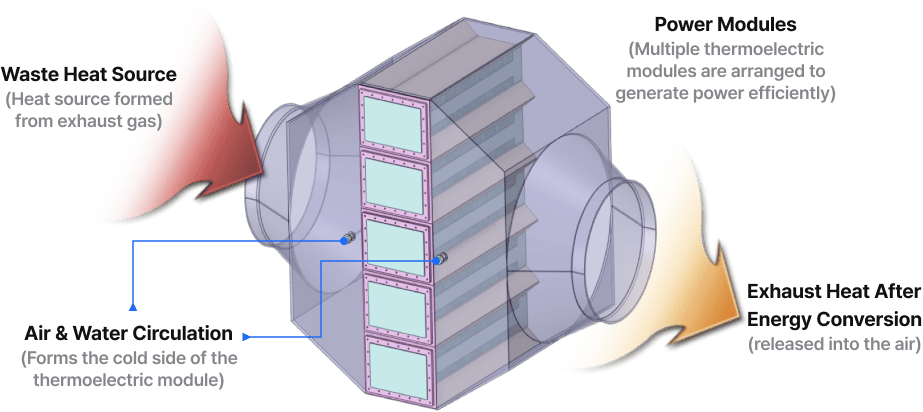
Thermoelectric Power Generation System

Basic Equipment Configuration

High-Temperature Section Formation
Receives waste heat sources to form the high-temperature section of the system.
Low-Temperature Section Formation
Receives cooling water to form the low-temperature section of the system.
Chamber Design
Custom-designed and manufactured to match the layout and requirements of the installation site.
Power Utilization
The generated electricity is efficiently utilized by connecting it to the power system of the application site.